
Allowance for doubtful accounts: Methods & calculations

Worse still, Atradius found that bad debts—invoices that customers never pay—account for 9% of all B2B sales. As of January 1, 2018, GAAP requires a change in how health-care entities record bad debt expense. Before this change, these entities would record revenues for billed services, even if they did not expect to collect any payment from the patient. Using the example above, let’s say that a company reports an accounts receivable debit balance of $1,000,000 on June 30.
Use historical data to estimate uncollectible debts
HighRadius is redefining treasury with AI-driven tools like LiveCube for predictive forecasting and no-code scenario building. Its Cash Management module automates bank integration, global visibility, cash positioning, target balances, and reconciliation—streamlining end-to-end treasury operations. You can also use Doubtful Accounts Expense and Allowance for Doubtful Accounts in lieu of Bad Debts Expense and Allowance for Bad Debts. Some say that Bad Debts have a higher degree of uncollectibility that Doubtful Accounts.
Specific Identification Method
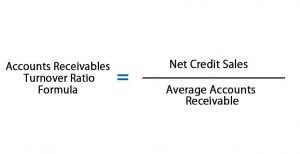
However, contrary to subtracting it, you actually incorporate it into your overall accounts receivable (AR). Because it gives you a more realistic picture of the money, you can expect to collect from your customers. An allowance for doubtful accounts (uncollectible accounts) represents a company’s proactive prediction of the percentage of outstanding accounts receivable that they anticipate might not be recoverable.
What is bad debt expense?
- An AR automation platform with intelligent collections capabilities can help you stay on top of your collections so that overdue invoices don’t go past the point of no return.
- While Accounts Receivable is an asset, the Allowance for Doubtful Accounts serves as a deduction from that asset.
- This proactive approach helps companies anticipate and mitigate risks, ensuring reported assets are closer to realizable values.
- The accounts receivable aging method uses accounts receivable aging reports to monitor past due invoices.
- The most prevalent approach — called the “percent of sales method” — uses a pre-determined percentage of total sales assumption to forecast the uncollectible credit sales.
Effective financial planning and reporting requires accurate calculation of the allowance for doubtful accounts. Businesses typically use historical data and established accounting methods to estimate uncollectible debts, ensuring consistency and accuracy. With the percentage of sales method, you will estimate the number of invoices you are unlikely to collect using historical default data. Multiplying the default rate with the total AR will give you an estimate of bad debt expense. Creating this allowance ensures that the financial statements reflect a more accurate picture of the company’s financial position and performance. The allowance provides a cushion against potential losses arising from bad debts, which may otherwise significantly impact the company’s cash flow and profitability.
- The allowance for doubtful accounts is a contra asset account, and so is listed as a deduction immediately below the accounts receivable line item in the balance sheet.
- Based on our past experiences and the industry average data, we expect that 3% of total credit sales during the period will become uncollectible accounts.
- At the end of each period, update your allowance with adjusting entries so your expenses match revenue (hello, matching principle!).
- This allows you to see exactly what you have to work with, so you know whether you have enough to cover your costs and provide the financial headroom to unlock business growth.
- Master the fundamentals of financial accounting with our Accounting for Financial Analysts Course.
- Businesses should develop clear guidelines for estimating uncollectible debts, including the data sources and methods to be used.
Company
In accordance with GAAP revenue recognition policies, the company must still record credit sales (i.e. not cash) as revenue on the income statement and accounts receivable on the balance sheet. At that point, the specific receivable is written off directly against the bad debt expense account. While straightforward, this method can violate the matching principle of accounting, as it doesn’t match expenses with the revenues they helped generate in the same period. The allowance for doubtful accounts provides valuable insights into a company’s financial health, particularly in evaluating credit policies and customer reliability. Analysing this data helps businesses identify potential risks and opportunities for improvement. Preventing bad debts begins with robust credit policies and thorough customer assessments.

A company that underestimates its allowance for doubtful accounts will have a falsely high accounts receivable number on their balance sheet. This means they didn’t properly estimate their potential bad debts, resulting in overstated assets, inflated net income on the income statement, and an inaccurate understanding of their financial health. While both bad debt expense accounting and allowance for doubtful accounts signify the same thing from a business perspective, the accounting world treats them very differently. Allowance for doubtful accounts is a balance sheet account and is listed as a contra asset.
When assessing accounts receivable, there may come a time when it becomes clear that one or more accounts are simply not going to be paid. First, use https://www.bookstime.com/ the percentage to “mark down” your income each month for planning purposes. If your bad debt percentage is 5% and your monthly revenue is $100,000, base your budget on $95,000 instead.
Recovery of Accounts Receivable
Recording bad debt expense affects the income statement (where the expense is reported) and balance sheet (where the receivable balance is reduced). Understanding these expenses is critical to reflecting a more accurate financial position for the company. Under the direct write-off method, the company records the journal entry for bad debt expense by debiting bad debt expense and crediting accounts receivable. Accurate financial reporting requires maintaining an allowance allowance for doubtful accounts normal balance for doubtful accounts.
Financial Close Solution
When a business grants credit to a customer, the customer is able to buy from the business “on account.” The customer gets the merchandise or service now and pays for the merchandise or service later. The amount due from the customer is tracked using an account called Accounts Receivable. The Accounts Receivable balance on the Balance Sheet is made up of all the individual customers and customer invoices currently outstanding.
For example, if the company wanted the deduction for the write-off in 2018, it might claim that it was actually uncollectible in 2018, instead of in 2019. In the example above, we estimated an arbitrary number for the allowance for doubtful accounts. There are two primary methods for estimating the amount of accounts receivable that are not expected to be converted into cash. This Debt to Asset Ratio transaction doesn’t affect individual customer accounts—every customer still officially owes its full balance. Instead, it creates a pool of expected losses that sits on the balance sheet, reducing the overall reported value of AR from $1.5 million to $1.425 million. Companies with a long operating history may rely on their long-term average of uncollectible accounts.